




How to Choose the Right T-Shirt Size: A Complete Measurement Guide
1. Introduction
How to choose T-shirt size is one of the most common questions people face when shopping for clothes online. A T-shirt may look perfect in product photographs, but choosing the wrong size can change its appearance, comfort, and overall fit.
Some people prefer T-shirts that sit close to the body, while others enjoy a relaxed or oversized silhouette. However, finding the right size is not simply about choosing between S, M, L, XL, or XXL.
Two T-shirts labelled Medium can have completely different measurements depending on the brand, design, fabric, and intended fit.
This is why understanding measurements is important.
Whether you are purchasing a regular-fit basic T-shirt, a relaxed everyday design, or an oversized premium T-shirt, knowing how to read a size chart can help you make a more informed decision.
In this guide, we will explain how to measure yourself, understand clothing measurements, compare size charts, and select a T-shirt size that matches your preferred fit.
2. Why Choosing the Right T-Shirt Size Matters
The right T-shirt size affects more than just comfort. It also influences how the garment looks and how its proportions work with the rest of your outfit.
Comfort and Movement
A T-shirt should allow you to move naturally without creating unnecessary tension around the chest, shoulders, or sleeves.
If it is too tight, you may experience pulling across the chest or restricted arm movement.
If it is too loose for your preference, the extra fabric may create a silhouette you did not intend.
Overall Appearance
The correct measurements help maintain the intended shape of a garment.
For example:
-
A slim-fit T-shirt should sit closer to the body.
-
A regular-fit T-shirt should provide balanced room.
-
A relaxed-fit T-shirt should offer additional space.
-
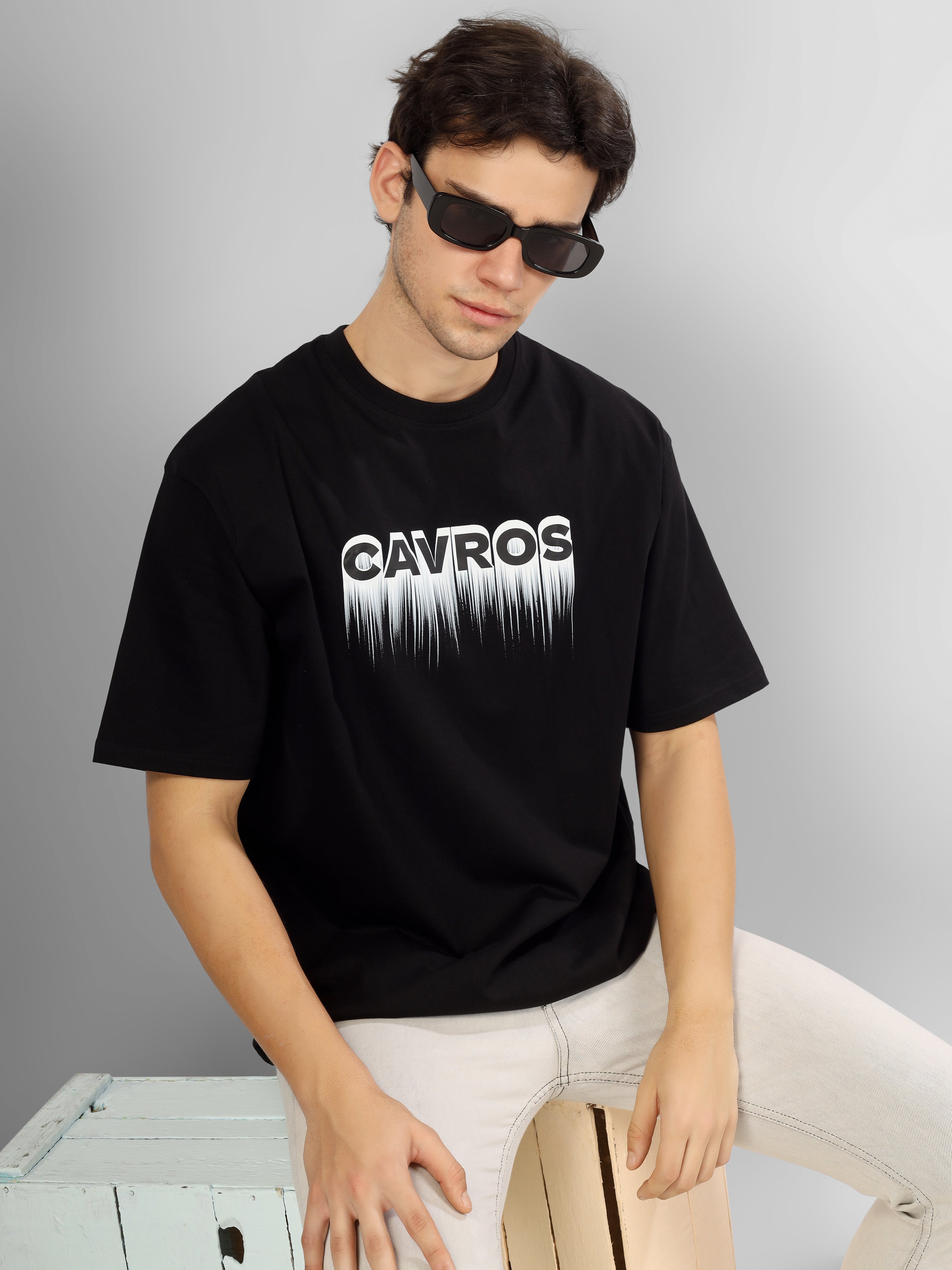
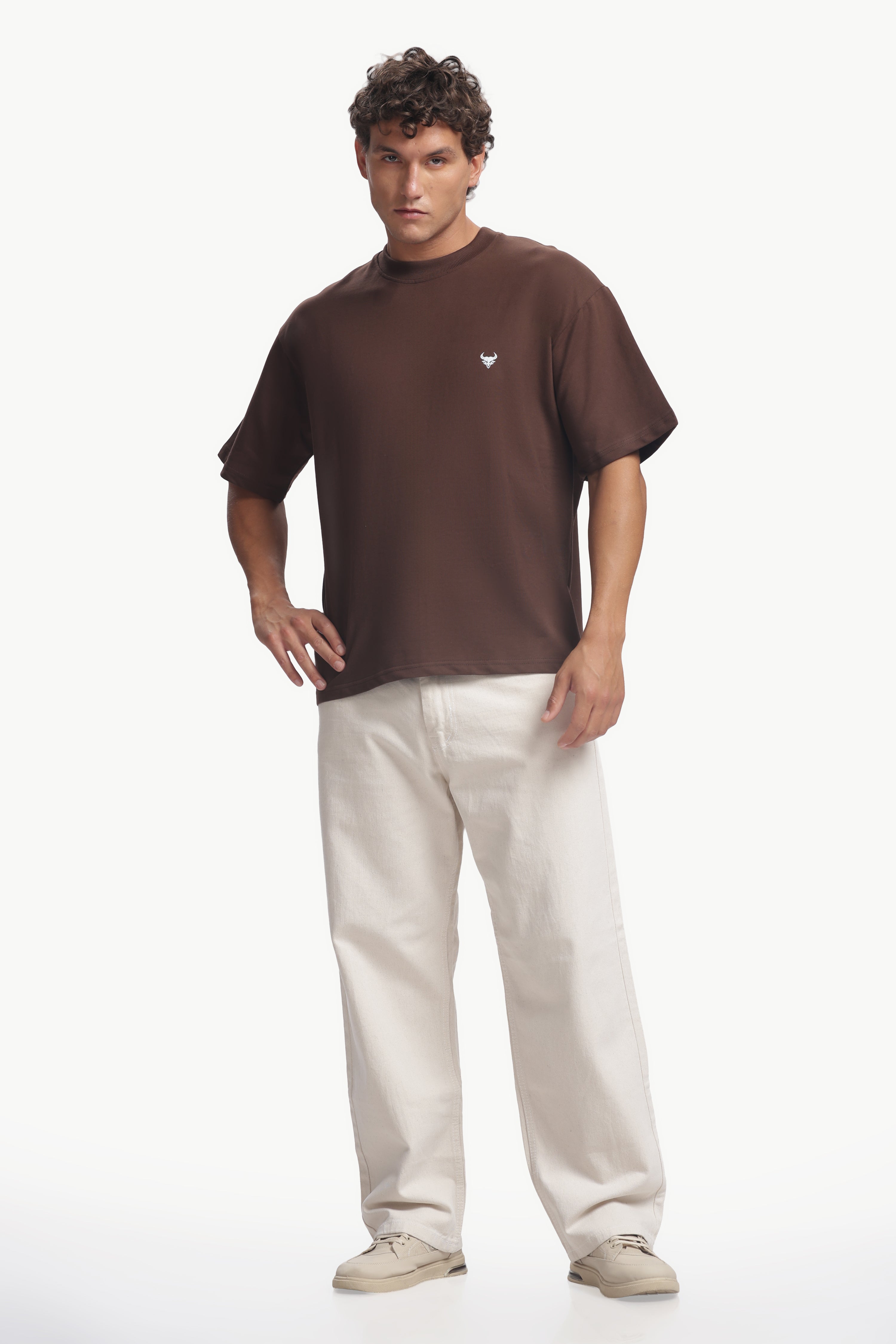
An oversized T-shirt should create a deliberately roomier silhouette.
Choosing the wrong size can change these proportions.
Better Online Shopping Decisions
When shopping online, you cannot always try the garment before placing an order.
A size chart gives you measurable information that can help you compare products before purchasing.
Instead of relying only on the size label, you can compare the garment's chest, shoulder, sleeve, and length measurements with a T-shirt you already own.
Reducing Sizing Confusion
Many shoppers assume that their size remains the same across every clothing brand.
In reality, sizing systems can differ.
A Medium from one brand may fit similarly to a Small or Large from another, depending on its measurements and design.
The key takeaway: Your ideal T-shirt size depends on the garment's actual measurements and intended fit, not just the letter printed on its label.
3. Understanding T-Shirt Sizing
Before taking measurements, it is useful to understand what clothing sizes represent.
Most T-shirts are available in standard labels such as:
-
XS — Extra Small
-
S — Small
-
M — Medium
-
L — Large
-
XL — Extra Large
-
XXL — Double Extra Large
These labels provide a convenient way to organise clothing sizes, but they are not universal measurement standards.
Different brands may use different measurements for the same size.
What Determines a T-Shirt's Size?
Several dimensions contribute to the final fit of a T-shirt.
1. Chest Width
The horizontal measurement across the chest of the garment. It helps determine how much room the T-shirt provides around the upper body.
2. Shoulder Width
The distance between the two shoulder seams. It influences where the garment sits around the shoulders.
3. Body Length
The vertical measurement from the specified top point near the shoulder or neckline to the bottom hem.
4. Sleeve Length
The measurement from the sleeve's starting point to its opening.
5. Sleeve Opening
The width of the sleeve opening. It affects how comfortably the sleeve sits around the upper arm.
6. Body Width
The width of the garment through the body. Depending on the product, this may be measured at the chest, waist, or another specified point.
Not every brand includes all these measurements in its size chart. However, chest, shoulder, and length measurements are particularly useful when comparing T-shirts.
4. Body Measurements vs Garment Measurements
One of the biggest sources of confusion when choosing clothing sizes is the difference between body measurements and garment measurements.
They describe two different things.
What Are Body Measurements?
Body measurements describe the dimensions of your body.
Examples include:
-
Chest circumference
-
Shoulder width
-
Waist circumference
-
Arm circumference
These measurements help a brand recommend a size based on the person wearing the garment.
What Are Garment Measurements?
Garment measurements describe the dimensions of the finished clothing item.
For example:
-
T-shirt chest width
-
Shoulder width
-
Body length
-
Sleeve length
-
Sleeve opening
These measurements help you understand the actual dimensions of the T-shirt.
Understanding the Difference With an Example
Imagine that your chest circumference is 100 cm.
A product size chart lists the garment's chest width as 54 cm.
These numbers are not directly interchangeable.
The 100 cm measurement describes the distance around your body. The 54 cm measurement generally describes the garment measured flat across the chest.
A flat garment measurement is not the same as a body circumference measurement.
Which Measurement Should You Use?
It depends on the type of size chart provided.
| Size chart type | What to measure |
|---|---|
| Body measurement chart | Your body |
| Garment measurement chart | A T-shirt that fits you well |
| General size recommendation | Your measurements, together with the brand's guidance |
Important: Always check the measurement instructions provided by the brand. Different companies may use slightly different measuring points.
5. Important Measurements to Know Before Buying a T-Shirt
Before selecting a size, understand the measurements that influence how a T-shirt fits.
1. Chest Measurement
Chest measurement is one of the most useful dimensions when selecting a T-shirt.
For body measurements, the measuring tape is wrapped around the fullest part of the chest.
For garment measurements, the T-shirt is generally laid flat and measured horizontally across the chest at the specified point.
This measurement helps you understand how much room the garment provides through the upper body.
2. Shoulder Measurement
Shoulder width determines how the T-shirt sits across your upper body.
For a conventional regular-fit T-shirt, the shoulder seams often sit close to the natural shoulder points.
In oversized designs, the shoulder seams may extend beyond those points, creating a dropped-shoulder appearance.
This is why shoulder measurements are especially important when comparing different fit categories.
3. Body Length
Body length describes how far the T-shirt extends from its specified top measurement point to the bottom hem.
A T-shirt may fit comfortably around the chest but still feel too long or too short.
Your preferred length depends on your proportions, styling preferences, and the intended design.
4. Sleeve Length
Sleeve length influences how the T-shirt looks around the upper arm.
Slim-fit designs often have more controlled sleeve proportions, while relaxed and oversized designs may feature longer or wider sleeves.
Always compare sleeves using the same measurement method.
5. Sleeve Opening
Sleeve opening refers to the width at the bottom of the sleeve.
A narrower opening can create a closer-fitting appearance, while a wider opening can provide a roomier look.
It is particularly useful when comparing oversized and relaxed silhouettes.
6. How to Measure Your Body for a T-Shirt
You can take basic body measurements at home using a flexible measuring tape.
For more consistent results, stand naturally and avoid pulling the measuring tape too tightly.
A. How to Measure Your Chest
-
Stand straight in a relaxed position.
-
Place the measuring tape around the fullest part of your chest.
-
Keep the tape horizontal and level.
-
Make sure it is comfortably positioned without compressing your body.
-
Record the measurement in centimetres.
This measurement is useful when comparing your body dimensions with a brand's body-size chart.
B. How to Measure Your Shoulders
-
Stand naturally with your shoulders relaxed.
-
Locate the outer points where your shoulders meet your upper arms.
-
Measure across your back from one shoulder point to the other.
-
Keep the measuring tape straight.
-
Record the measurement.
Shoulder measurements can help you understand whether a garment's shoulder proportions are likely to suit you.
C. How to Measure Your Waist
-
Stand in a natural position.
-
Locate your natural waist or the area specified by the brand.
-
Wrap the measuring tape around it.
-
Keep the tape level.
-
Record the measurement without pulling it tightly.
Waist measurement is not included in every T-shirt size chart, but it can provide additional information about your proportions.
D. How to Measure Your Arm
For body measurements, measure around the fullest part of your upper arm if the brand provides an arm measurement guide.
For garment measurements, sleeve length is generally measured from the shoulder seam to the sleeve opening.
Make sure you understand which type of measurement the size chart is asking for.
E. How to Measure Your Height
Stand barefoot against a flat wall.
Keep your posture natural and measure from the floor to the top of your head.
Height is useful as general sizing context, particularly when reviewing model information on product pages. However, height alone cannot determine the correct T-shirt size.
Tips for Accurate Measurements
-
Use a flexible measuring tape.
-
Stand in a natural position.
-
Avoid measuring over bulky clothing.
-
Keep the tape level.
-
Do not pull the tape too tightly.
-
Record measurements in centimetres.
-
Repeat measurements if you are unsure.
-
Follow the brand's measurement instructions.
Remember: Body measurements are only one part of choosing a T-shirt. You must also consider the garment's intended fit and actual dimensions.
7. How to Measure a T-Shirt You Already Own
One of the most reliable ways to choose a T-shirt size when shopping online is to measure a T-shirt you already own.
This method is especially useful if you have a favourite T-shirt that fits exactly how you like.
Instead of guessing whether you should purchase a Small, Medium, or Large, you can compare the actual dimensions of your existing garment with the new product's size chart.
Step 1: Select the Right T-Shirt
Choose a T-shirt that fits you comfortably.
Consider what you want your new T-shirt to look like:
-
For regular fit, select a regular-fit T-shirt.
-
For slim fit, select a slim-fit T-shirt.
-
For relaxed fit, select a relaxed-fit T-shirt.
-
For oversized fit, select an oversized T-shirt.
Avoid using a stretched, damaged, or heavily worn garment as your reference.
Step 2: Lay It on a Flat Surface
Place the T-shirt on a clean, flat surface.
Smooth out wrinkles gently without stretching the fabric.
Make sure the front and back panels are positioned naturally.
Step 3: Measure the Chest Width
Measure horizontally across the garment, generally below the armholes at the brand's specified chest measurement point.
Record the measurement in centimetres.
Remember that this is a flat measurement, not the full circumference around the garment.
Step 4: Measure the Shoulder Width
Measure from one shoulder seam to the other.
This measurement is particularly useful when comparing regular and oversized T-shirts because shoulder placement can change significantly between these designs.
Step 5: Measure the Body Length
Measure from the specified highest shoulder point near the neckline down to the bottom hem.
Keep the measuring tape straight.
Step 6: Measure the Sleeve
Measure from the shoulder seam to the sleeve opening.
If your T-shirt has dropped shoulders, remember that its sleeve measurement may differ from a conventional shoulder construction.
Step 7: Record and Compare
Create a simple measurement record.
| Measurement | Your existing T-shirt |
|---|---|
| Chest width | Record in cm |
| Shoulder width | Record in cm |
| Body length | Record in cm |
| Sleeve length | Record in cm |
| Sleeve opening | Record in cm |
Compare these values with the new product's garment size chart.
Practical tip: Compare similar fit categories whenever possible. A regular-fit T-shirt is not always a useful reference for purchasing an oversized design.
8. How to Read a T-Shirt Size Chart
A size chart provides information about the dimensions associated with each available clothing size.
However, reading it correctly is just as important as taking accurate measurements.
Understand the Measurement Columns
A typical T-shirt size chart may contain the following information:
| Measurement | Meaning |
|---|---|
| Size | Clothing label such as S, M, L, XL or XXL |
| Chest | Garment width or body chest measurement, depending on chart type |
| Shoulder | Shoulder width or body shoulder measurement |
| Length | Vertical garment length or body length |
| Sleeve | Sleeve length |
| Sleeve opening | Width at the sleeve opening |
Before comparing numbers, identify whether the chart describes body dimensions or finished garment dimensions.
Illustrative T-Shirt Garment Size Chart
The following table is an educational example only. It does not represent official D'CAVROS product measurements.
| Size | Chest Width | Shoulder | Length |
|---|---|---|---|
| S | 52 cm | 46 cm | 68 cm |
| M | 54 cm | 48 cm | 70 cm |
| L | 56 cm | 50 cm | 72 cm |
| XL | 58 cm | 52 cm | 74 cm |
| XXL | 60 cm | 54 cm | 76 cm |
These are illustrative garment dimensions measured flat where applicable. Actual measurements vary by brand, product, pattern, and manufacturing tolerance.
How to Use This Chart
Suppose your favourite regular-fit T-shirt has the following garment measurements:
-
Chest width: 56 cm
-
Shoulder width: 50 cm
-
Length: 72 cm
You can use these measurements as a reference when comparing a new regular-fit T-shirt.
If another brand lists similar garment dimensions for size L, that size may be a reasonable starting point.
However, the fabric, construction, and fit design can still influence the final appearance.
Do Not Assume Every Brand Uses the Same Size Chart
A Medium from one brand may not have the same dimensions as a Medium from another.
Differences can occur because of:
-
Different garment patterns
-
Different fit categories
-
Different sizing standards
-
Different target silhouettes
-
Fabric characteristics
-
Manufacturing tolerances
Always use the size chart belonging to the exact product you intend to purchase.
9. What to Do If You Are Between Two T-Shirt Sizes
Sometimes your measurements may fall between two available sizes.
For example, you may find that one size provides the shoulder width you prefer while the next size offers a chest measurement closer to your existing T-shirt.
This situation does not automatically mean you should size up or down.
Instead, consider the following factors.
1. Identify Your Preferred Fit
Your preferred silhouette should influence your decision.
If you want a closer-fitting appearance, the smaller option may be worth considering if it still provides comfortable movement.
If you prefer additional room, the larger option may be more suitable.
2. Compare the Chest Measurement
The chest is an important area to examine because excessive tightness can affect comfort and movement.
Compare the garment measurements with a T-shirt that fits you well.
3. Check Shoulder Width
Do not ignore shoulder measurements when choosing between two sizes.
A larger size may increase shoulder width and change the overall appearance of the garment.
This is particularly important for regular and slim-fit designs.
4. Consider the Body Length
If the larger size is considerably longer, it may not create the proportions you want.
Compare the length before deciding.
5. Read the Brand's Size Recommendation
Some brands provide additional guidance such as:
-
Stay true to size.
-
Size up for a looser fit.
-
Size down for a closer fit.
Use these recommendations alongside the actual measurements rather than relying on them alone.
Simple Decision-Making Guide
| Your preference | What to consider |
|---|---|
| Closer fit | Compare the smaller size's chest and shoulder measurements |
| More room | Compare the larger size's measurements |
| Preferred length | Prioritise the garment length you are comfortable wearing |
| Unsure between sizes | Compare both options with a T-shirt you already own |
Important: The correct choice depends on the product's measurements and construction. There is no universal rule that everyone should size up or down.
10. How to Choose the Right Size for Different T-Shirt Fits
The same size label can create different appearances across different fit categories.
A Medium slim-fit T-shirt and a Medium oversized T-shirt are not expected to have identical dimensions.
Understanding the intended silhouette is therefore essential.
A. Choosing a Size for Slim-Fit T-Shirts
Slim-fit T-shirts are designed to sit closer to the body.
When selecting a size, pay particular attention to:
-
Chest width
-
Shoulder width
-
Sleeve opening
-
Body length
The garment should follow your natural shape without creating uncomfortable pulling or restricting movement.
Do not choose a smaller size simply because you want a slim appearance. The pattern should already provide the intended closer-fitting silhouette.
B. Choosing a Size for Regular-Fit T-Shirts
Regular-fit T-shirts provide a balanced silhouette.
They are generally a useful starting point for people who prefer a conventional everyday T-shirt shape.
When choosing a size, compare:
-
Chest width for comfortable room
-
Shoulder width for natural placement
-
Body length for suitable proportions
-
Sleeve length for your preferred appearance
Your usual size may be a useful starting point, but always check the product's size chart.
C. Choosing a Size for Relaxed-Fit T-Shirts
Relaxed-fit T-shirts provide additional room compared with conventional regular-fit designs.
When choosing a size, look at the chest and shoulder dimensions together.
A relaxed fit should provide the intended extra space without automatically requiring you to purchase a larger size.
Check the product description to understand how much room the design is intended to provide.
D. Choosing a Size for Oversized T-Shirts
Oversized T-shirts are designed with a more generous silhouette.
Depending on the design, they may feature:
-
Wider chest measurements
-
Dropped shoulders
-
Broader sleeves
-
A roomier body
-
Different body-length proportions
If a brand recommends staying true to size for its intended oversized fit, use your usual size as the starting point.
Sizing up further may create more volume and length than intended.
Quick Comparison
| Fit category | Main sizing consideration |
|---|---|
| Slim fit | Comfortable closer fit through the body |
| Regular fit | Balanced chest, shoulders, and length |
| Relaxed fit | Additional room without excessive volume |
| Oversized fit | Intended wider proportions and silhouette |
For a deeper understanding of these silhouettes, read Blog #016 — The Complete Guide to T-Shirt Fits: Regular, Slim, Relaxed and Oversized.
11. Does Fabric Affect T-Shirt Sizing?
Yes. Fabric characteristics can influence how a T-shirt feels and appears when worn.
Two garments with similar measurements may not behave exactly the same because their fabrics can differ.
Fabric Composition
Composition describes the fibres used to make the fabric.
For example, cotton, polyester, and blended fabrics can have different characteristics.
Some fabrics have more stretch than others, depending on their construction and composition.
GSM and Fabric Weight
GSM stands for grams per square metre. It describes the weight of a fabric per unit area.
A higher GSM generally indicates a heavier fabric, while a lower GSM indicates a lighter fabric.
However, GSM alone does not determine whether a T-shirt will fit tightly or loosely.
The pattern, measurements, construction, and fabric characteristics all contribute to the final result.
Fabric Drape
Drape describes how fabric hangs and falls when worn.
A fabric with a different structure or weight may create a different appearance even when two T-shirts have similar dimensions.
Shrinkage and Care
Some garments may change dimensions after washing, depending on the fibre content, fabric construction, finishing, and care conditions.
Always follow the garment's care instructions.
Do not assume every cotton T-shirt will shrink by the same amount.
Remember: Choose your size using the product's actual measurements. Fabric information should help you understand how the garment may feel and behave, not replace the size chart.
12. Common T-Shirt Sizing Mistakes to Avoid
Even when shoppers understand size charts, a few common mistakes can lead to choosing the wrong T-shirt size.
Here are some of the most frequent sizing mistakes and how to avoid them.
Mistake 1: Choosing a Size Based Only on the Label
Many people purchase the same size across every clothing brand without checking the measurements.
However, sizing can vary between brands and products.
How to avoid it: Always compare the product's size chart before purchasing.
Mistake 2: Confusing Body Measurements With Garment Measurements
A body chest circumference and a T-shirt's flat chest width are two different measurements.
Comparing them directly can lead to an incorrect size decision.
How to avoid it: Check whether the size chart displays body dimensions or garment dimensions.
Mistake 3: Ignoring Shoulder Width
A T-shirt may provide enough room around the chest but still look different from what you expected because of its shoulder proportions.
How to avoid it: Compare shoulder measurements, especially when purchasing slim-fit or oversized designs.
Mistake 4: Checking Chest Width but Ignoring Length
A T-shirt may fit comfortably around your chest but appear too long or too short.
How to avoid it: Compare the body length with a T-shirt you already own.
Mistake 5: Assuming Oversized Means Buying a Bigger Size
Oversized is a designed silhouette, not simply a larger size label.
Buying a larger regular-fit T-shirt may increase its dimensions without creating the intended oversized proportions.
How to avoid it: Select a garment designed as oversized and follow its size chart.
Mistake 6: Ignoring Sleeve Measurements
Sleeve length and opening can significantly influence the appearance of a T-shirt.
How to avoid it: Compare sleeve measurements when they are available, particularly if you have a specific sleeve preference.
Mistake 7: Using Height and Weight as the Only Reference
Two people with the same height and weight may have different chest, shoulder, and body proportions.
How to avoid it: Use height and weight only as general references. Prioritise the brand's measurement guide.
Mistake 8: Ignoring the Fabric and Care Instructions
Fabric characteristics and washing conditions may influence how a garment feels and whether its dimensions change over time.
How to avoid it: Review the fabric composition and care instructions before purchasing.
13. How to Choose the Right T-Shirt Size When Shopping Online
Shopping online offers convenience, but selecting the correct size requires attention to product information.
You cannot always try the garment before purchasing it, so the product page becomes your primary sizing reference.
Follow these steps before placing an order.
Step 1: Identify the Intended Fit
First, understand whether the product is slim, regular, relaxed, or oversized.
Do not compare measurements without considering the intended silhouette.
Step 2: Open the Product Size Chart
Find the size chart associated with the exact product.
Avoid assuming that every product from the same brand uses identical dimensions.
Step 3: Check the Measurement Type
Determine whether the chart displays body measurements or finished garment measurements.
This is essential for making a meaningful comparison.
Step 4: Compare With Your Existing T-Shirt
If garment measurements are provided, compare them with a T-shirt that already fits you well.
Try to select one with the same intended fit.
Step 5: Check Model Information
If available, review the model's height and the size worn in the product photographs.
This provides additional context, although it does not guarantee that the same size will suit everyone with a similar height.
Step 6: Review Fabric Details
Look at the composition, GSM, and other fabric information provided by the brand.
These details help you understand the garment beyond its dimensions.
Step 7: Read the Sizing Recommendation
Follow the brand's specific guidance on whether to stay true to size, size up, or size down.
Use this alongside the actual measurements.
Step 8: Check the Return and Exchange Policy
Before purchasing, understand the brand's current return and exchange conditions.
This is particularly important when ordering from a brand for the first time.
Online T-Shirt Buying Checklist
- Identify the intended fit.
- Check the correct product size chart.
- Understand whether measurements are for the body or garment.
- Compare chest measurements.
- Check shoulder width.
- Compare body length.
- Review sleeve measurements.
- Read fabric and care information.
- Check model height and worn size, if available.
- Review the current return and exchange policy.
14. What Should a Good T-Shirt Size Chart Include?
A clear size chart helps customers make informed purchasing decisions.
For clothing brands, providing accurate measurement information can improve the online shopping experience and reduce sizing confusion.
A useful T-shirt size chart should include the following information.
1. Standard Size Labels
Display the available sizes clearly, such as XS, S, M, L, XL, and XXL.
2. Chest Measurement
Clearly state whether the measurement refers to body circumference or flat garment width.
3. Shoulder Measurement
Provide the shoulder measurement and explain where it is taken.
4. Body Length
Explain the starting and ending points used to measure the garment.
5. Sleeve Measurement
Include sleeve length and, where useful, sleeve opening.
6. Measurement Unit
Specify whether measurements are displayed in centimetres or inches.
7. Fit Description
Clearly identify the intended silhouette, such as regular, slim, relaxed, or oversized.
8. Model Information
Where available, include the model's height, the size worn, and relevant fit information.
9. Measurement Tolerance
If applicable, explain that small differences can occur because of manufacturing processes and measurement methods.
Why This Matters
A size chart should do more than list numbers.
It should explain what those numbers represent and help customers understand how the garment is designed to fit.
For premium clothing brands, clear product information is an important part of building customer confidence.
Key Takeaways: How to Choose the Right T-Shirt Size
Choosing the right T-shirt size becomes easier when you understand the measurements behind the label.
Remember these important points:
-
Do not rely only on S, M, L, or XL. Size labels can differ between brands.
-
Understand body measurements. Know your chest, shoulder, and other relevant dimensions.
-
Understand garment measurements. A flat chest width is not the same as body chest circumference.
-
Measure a T-shirt you already own. It can provide a useful reference when shopping online.
-
Check the shoulder width. Shoulder placement influences the overall silhouette.
-
Do not ignore body length. Chest fit alone does not determine the complete appearance.
-
Consider the intended fit. Slim, regular, relaxed, and oversized garments have different proportions.
-
Read the fabric information. Composition, GSM, construction, and care can influence how a garment feels and behaves.
-
Use the product-specific size chart. Do not assume every product follows identical measurements.
-
Choose comfort and proportions together. The best size is one that matches your preferences and the intended design.
The most reliable way to choose a T-shirt is to understand the garment's actual dimensions and compare them with what you already know fits you well.
Conclusion: The Right Size Starts With the Right Measurements
Choosing the right T-shirt size should not be a guessing game.
Understanding chest width, shoulder measurements, body length, and sleeve proportions can help you make better clothing decisions.
More importantly, knowing the difference between body measurements and garment measurements allows you to compare size charts correctly.
Whether you prefer slim, regular, relaxed, or oversized clothing, the most reliable approach is to understand the intended fit and compare the actual garment dimensions with a T-shirt you already own.
For online shoppers, a clear size chart and accurate product information make the entire buying process easier.
At D'CAVROS, we believe that understanding a garment is an important part of choosing it. The right measurements help you find a fit that reflects your comfort and personal style.
Know your measurements. Understand your fit. Wear your style with confidence.
Written by Dhruv Bhuva





Leave a comment
This site is protected by hCaptcha and the hCaptcha Privacy Policy and Terms of Service apply.